Tribal Crash Reporting Toolkit
Tribal Crash Data Tools
Pilot Project
A special project is underway to develop and pilot software tools that help Tribes improve crash data collection and analysis capabilities. The Cher-Ae Heights Indian Community of the Trinidad Rancheria along with Qk4, Inc. are leading this effort in partnership with the Federal Highway Administration and National Highway Traffic Safety Administration. This initial phase will encompass a p ilot program for a small number of Tribes who would like to participate. If you represent a Tribe that would like to be in the Pilot Program, please contact Adam.Larsen@dot.gov.
More information about this project can be found at https://www.qk4.com/services/native-american-services/tribal-crash-data-reporting-resources/
The Tribal Crash Reporting Toolkit, published in October 2020, is designed to help Tribal governments collect, manage, and analyze crash data. Each of the seven tools in the toolkit are described below along with links to download each tool. A toolkit manual is available here to further define each tool. The tools are:
- Crash Facts and Fictions Tool
- Data Analysis Tool
- Crash Reporting Tool
- Officer’s Instruction Tool
- Quality Control Tool
- Database Tool
- Tribal Self-Assessment Tool
This toolkit was developed by the National Highway Traffic Safety Administration. If you have comments or questions about the toolkit, please direct them to Tom Bragan, Tom.Bragan@dot.gov
The pilot project mentioned above will improve upon this existing toolkit.
Crash Reporting Facts and Fictions Tool
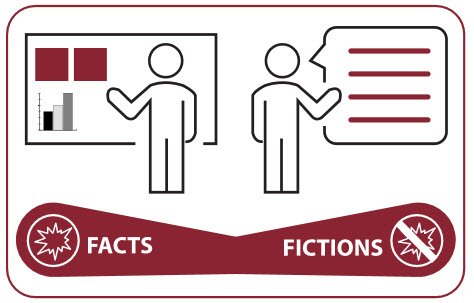
This tool is designed to help Tribal governments and their law enforcement agency partners (whether part of the Tribal government or not) address some of the most common misconceptions about law enforcement crash reporting. This list is intended to address concerns that Tribal agencies may have regarding incomplete, inaccurate, or inconsistent data. The treatments of topics in this tool are organized around various “fictions” about crash reporting. For each fiction, we present the facts of the situation—how the data are collected or used—and the tool includes suggestions on how a Tribe might counter that particular fiction through training, marketing, communications, outreach, and promotions
Data Analysis Tool
This tool is designed to help Tribal governments analyze crashes in their jurisdictions. This tool is not intended to be exhaustive, but it is intended to give Tribal governments a good understanding of the kinds of safety analyses they can perform and how the results can help define a safety program and its components.
Crash Reporting Tool
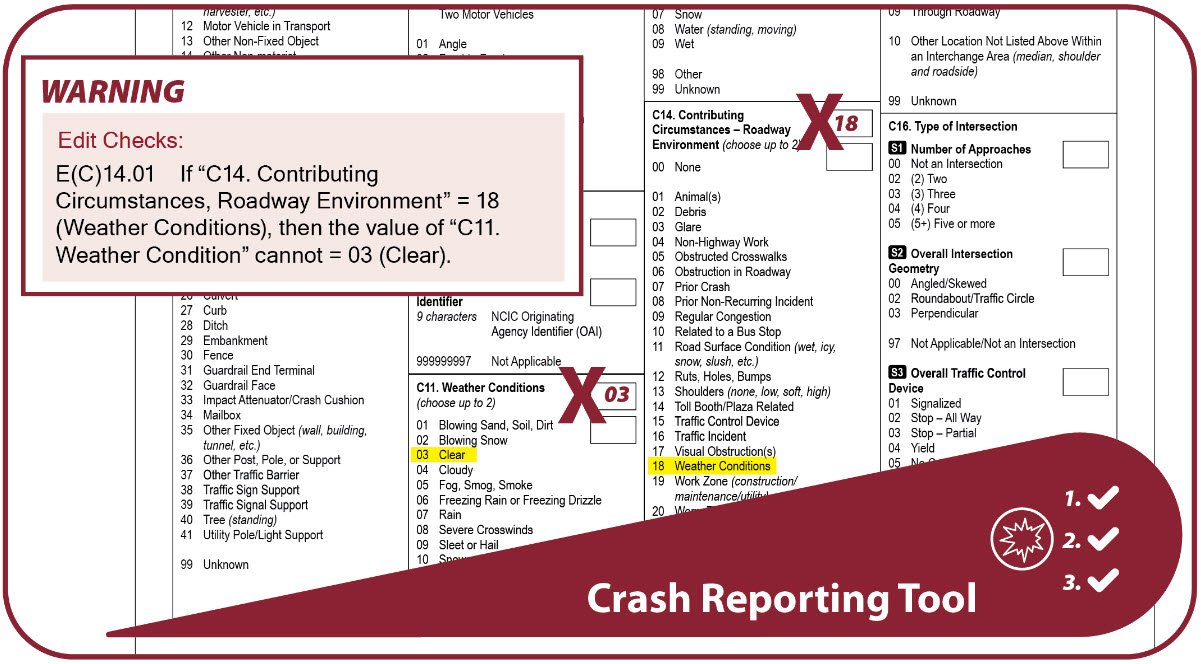
The Crash Reporting Tool is designed as a fillable pdf designed for law enforcement officers to use in collecting selected, important data about a crash. It is based on a subset of the Model Minimum Uniform Crash Criteria (MMUCC) 5th Edition data element definitions. The list of data elements is based on discussions with Tribal governments on the information they need for safety decision making. The MMUCC data elements that meet those information needs are included in the Crash Reporting Tool. The tool itself has active content so that officers can click on the data elements, select the relevant attributes from a list, and type in text as required. The tool also includes a way for officers to draw a crash scene diagram.
The Crash Reporting Tool is designed to store data for an individual crash report. That data can be shared with the Database Tool or sent to any desired database such as a law enforcement agency’s records management system. The Crash Reporting Tool is complemented by the Officer’s Instruction Tool, the Quality Control Tool, and the Database Tool. These are described below.
Officer’s Instruction Tool
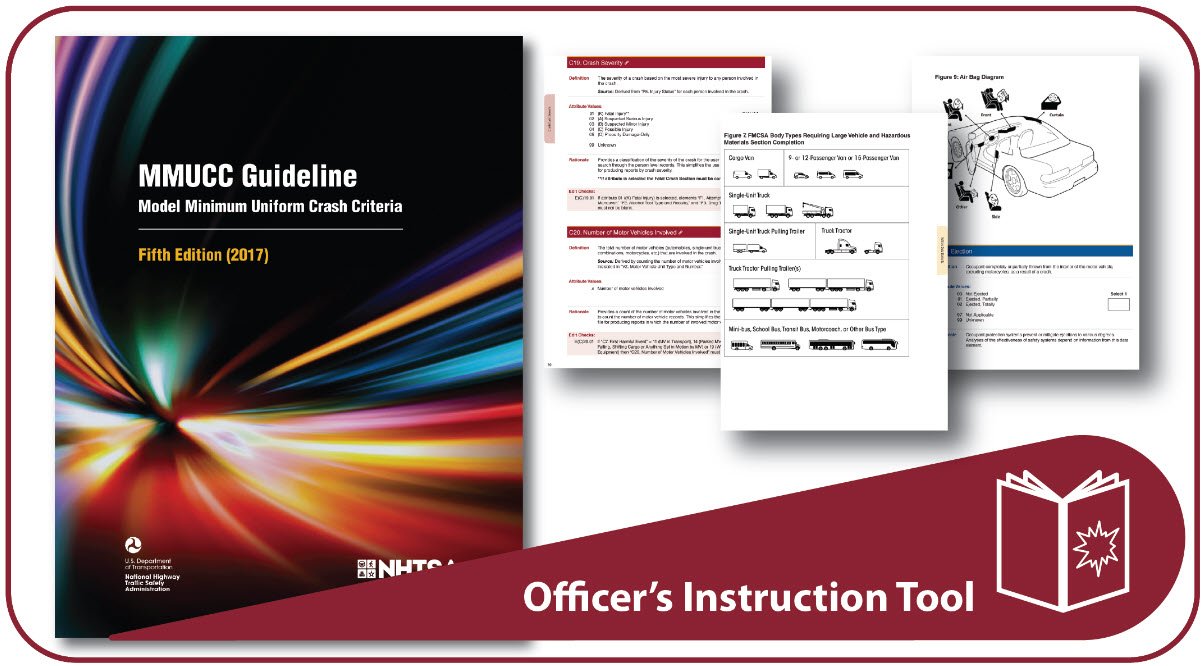
The Officer’s Instruction Tool presents the data element definitions and validation rules for each of the data elements included in the fillable pdf—the Crash Reporting Tool. This tool serves two purposes. The primary purpose is to serve as an instruction manual for law enforcement officers filling out a crash report. The secondary purpose is to serve as a resource for data users. The Officer’s Instruction Tool and the Crash Reporting Tool have the same data elements as drawn from the MMUCC 5th Edition.
Quality Control Tool
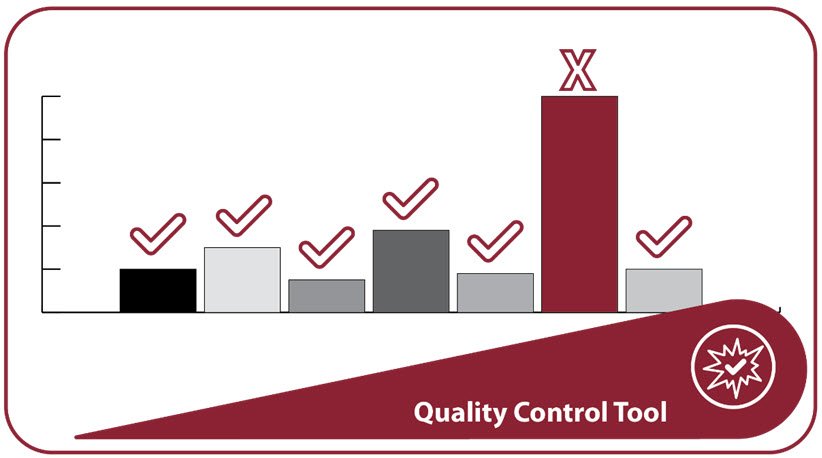
The Quality Control Tool has two parts. The first part is the validation rules drawn from the MMUCC 5th Edition. These rules define how the crash data can be checked for completeness, accuracy, and logical agreement. The second part of the Quality Control Tool describes how a Tribal government can assess data quality using a series of analyses. These analyses test for consistency across years and test the data for reasonableness.
Database Tool
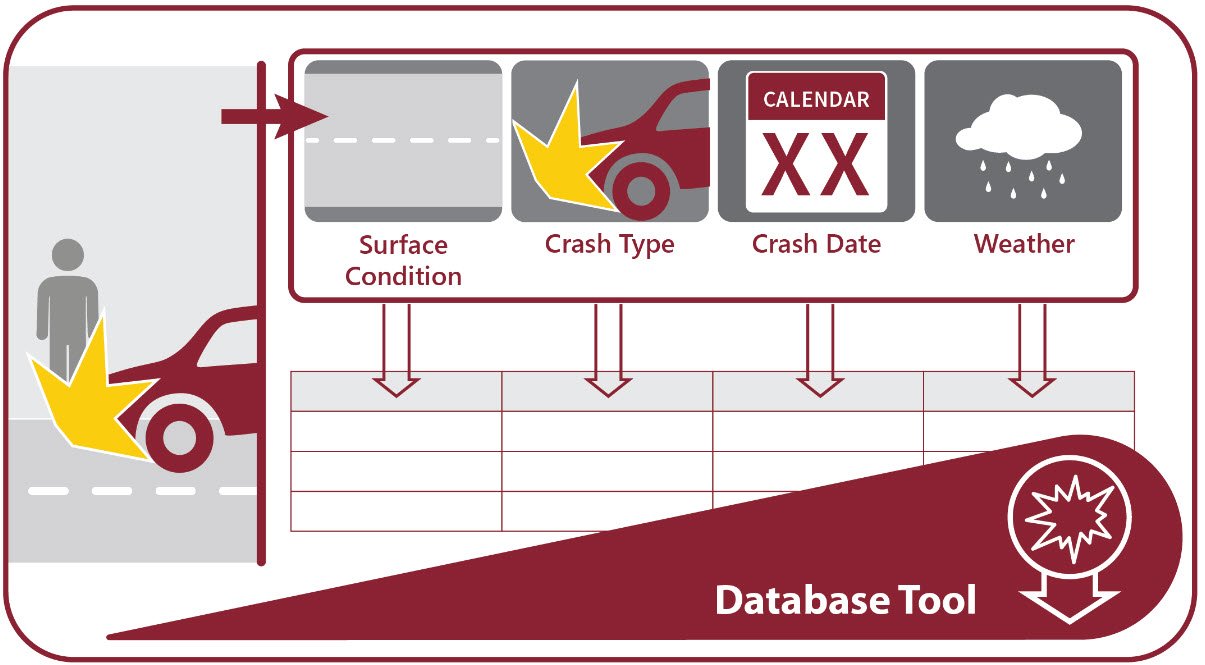
The Database Tool is designed to store and manage crash data. It can accept data from the Crash Reporting Tool and other law enforcement sources (e.g., a records management system). It is designed to implement the MMUCC 5th Edition data element subset included in the Crash Reporting Tool. It also incorporates the data validation rules implemented in the Crash Reporting Tool and the Quality Control Tool, and as documented in the Officer’s Instruction Tool.
Tribal Self-Assessment Tool
Intended to help Tribal governments identify opportunities to improve crash data collection, sharing, and use, the Tribal Self-Assessment Tool includes 21 questions and a selection of responses that describe how the Tribe’s crash system operates. Each question in the Tribal Self- Assessment Tool provides recommended actions depending on the Tribe’s selected responses. Tribes can use the outputs of the tool to develop a crash data improvement action plan. The self-assessment tool is available in two formats:
- Download Interactive Excel Workbook Self-Assessment Tool for Tribes (XLSX)
- Download static PDF, 0.7MB
A complementary self-assessment tool is also available for state governments and can serve as the basis of a conversation to collaborate on improved crash records.
This tool is based on the National Cooperative Highway Research Program Report 788: Guide for Effective Tribal Crash Reporting, which can be found at: www.trb.org/Publications/Blurbs/171540.aspx.